Simulation Webinar Archive
The MnSHEP webinar archive is home to a large series of free webinars on multiple simulation topics. You may also access future webinars via our main webinar page.
MnSHEP:
Theory:
Pre-briefing:
- Pre-Briefing: Setting the Stage for Success
- The Use of Mindfulness in Simulation Pre-Briefing to Increase Situational Awareness
Debriefing:
Facilitation:
Standardized Patients
Augmented Reality in Simulation
Virtual Simulation
- Virtual Simulation Past, Present, and Beyond
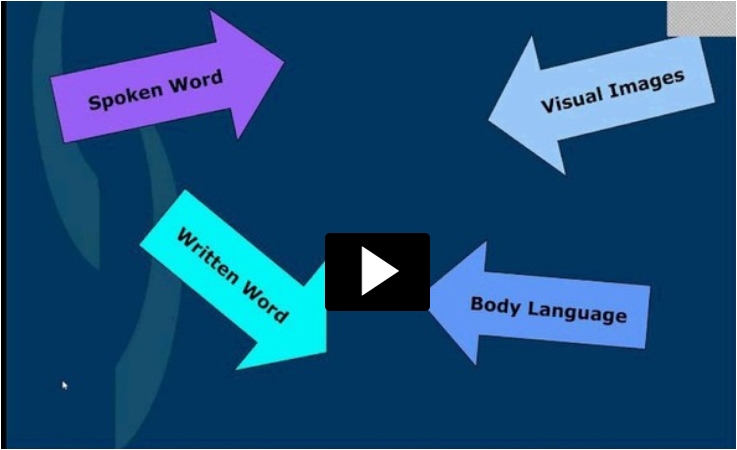
- A Recipe for Engaging Learners: The Use of Virtual Simulations in your Teaching Practice
Interprofessional Simulation
- Sharing Our Success Incorporating Simulation into Undergraduate Interprofessional Education
- Interprofessional Simulation for Workplace Violence in the Emergency Department
Specialty Areas
- HOSPICE AND HOMECARE: Simulation in Hospice and Homecare: Are Students Ready for the Challenge?
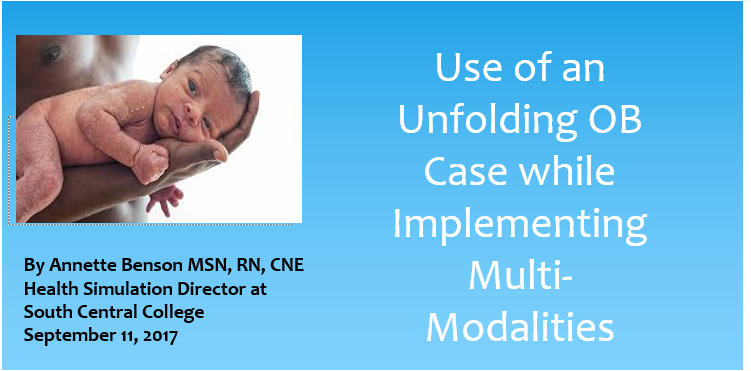
- OBSTETRICS: The Use of Unfolding OB Case While Implementing Multi-Modalities
- OBSTETRICS: Feel the Surge? Using Simulation to Birth RN's into the Obstetric Specialty
- PRECEPTOR: Using Simulation for Faculty and Preceptor Development
Accreditation and Certification
_______________________
Navigating the Accreditation
Process: Hints and Tips

Description: The Healthcare Simulation Accreditation process has many benefits. It allows programs to examine and streamline processes. These presenters will share stories about their accreditation journey and provide tips & hints on navigating this process, including important areas of focus, what to expect, and how to prepare.
LInk to Webinar
PowerPoint Handout
Link to Survey to receive a Certificate of Attendance
_______________________
Facilitating
Multiple Patient Simulations
INCORPORATING SIMULATION INTO UNDERGRADUATE INTERPROFESSIONAL EDUCATION |

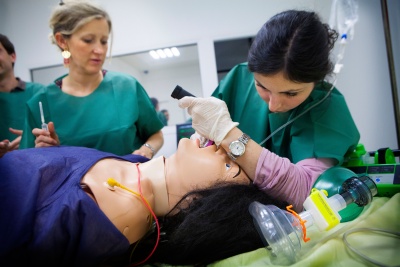
Description: The presenters will share three years of challenges and successes in creating and implementing a simulation-based curriculum teaching teamwork (using TeamSTEPPSTM) and inpatient clinical skills (using common inpatient urgencies and emergencies) over nine sessions to undergraduate medical, nursing, and pharmacy students.
Presenters: Berdette Reuer MSN-Ed, RN & Albertine Beard MD
Link to Webinar
Resources: PowerPoint
Survey:Link to Survey to receive a Certificate of Attendance
_______________________
Difficult Debriefing
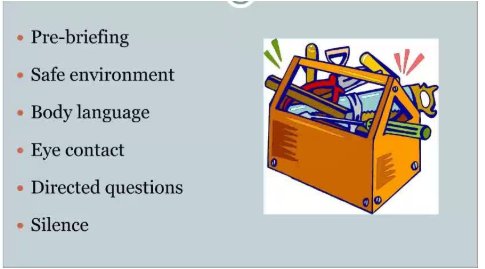
Description: Despite learning basic skills in debriefing, we occasionally face situations for which we do not feel prepared. During this educational webinar, we will discuss techniques to manage potential challenges in debriefing. These challenges will include: addressing emotional responses, encouraging responses in quiet learners, managing the learner who monopolizes the conversation, reducing defensive responses, and debriefing a scenario that does not go well.
Presenter: Denise Foy MSN, RN-BC, CHSE
Link to Webinar
Resources: PowerPoint
Link to Survey to receive a Certificate of Attendance
_______________________
An Overview of MnSHEP and
THE FREE Online Resources

Description: If you’d likes to learn about the history, resources, webinars, and future plans for MnSHEP, then this is a must for you! Join me as I provide a quick overview of MnSHEP and reveal multiple online resources that are new on our MnSHEP website!
Presenter: Sue Field DNP, RN, CNE
Link to Webinar
Resources: PowerPoint
No Continuing Education for this session
_______________________
Simulation in hospice and
homecare: Are students ready
for the challenge?
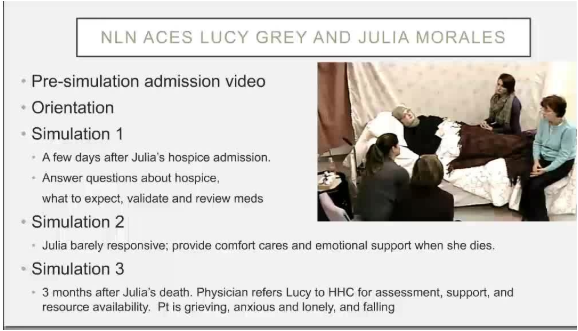
Description: Homecare/hospice simulations were created and modified from the Julia Morales and Lucy Grey unfolding case studies written by the National League of Nursing (NLN) Advancing Care Excellence for Seniors (ACE.S) and instructor and student booklets were created to assist faculty in developing these simulations. This presentation will describe these simulations and students’ readiness for hospice or homecare nursing, as well as provide information so that you can tailor them to fit your needs.
Presenter: Amy Koehler PhD, RN
Link to Webinar
Resources:
PowerPoint
Instructor Booklet (updated)
Student Booklet (updated)
The followings are forms to print off for students:
Simulation 1 and 2 chart
Simulation 3 chart
Simulation Roles Template
Simulation Schedule
Role Playing Scripts
Link to Survey to receive a Certificate of Attendance
_______________________
Arise Project: Augmented
Reality Integrated Simulation
Education
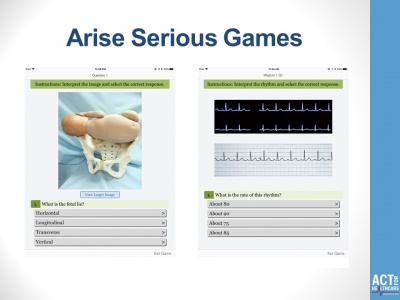
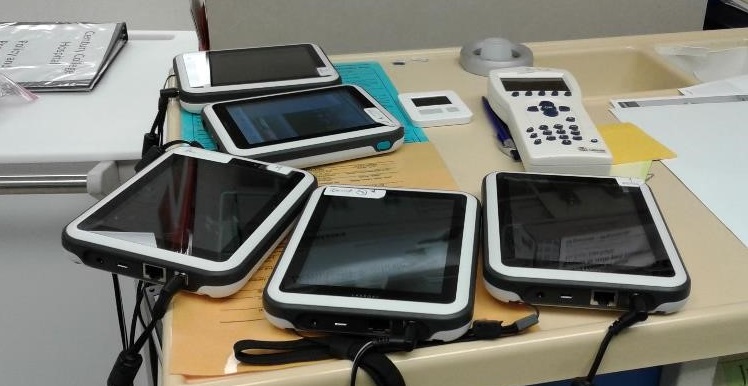
Description: The ARISE Project merges health care simulation education with augmented reality (AR) and game-based situated learning theory. Using iPads, QR Codes, and the Augmented Reality and Interactive Storytelling (ARIS) platform, the ARISE Project is developing 150 AR simulated learning experiences for use by students in various health care disciplines including Nursing, Respiratory Therapy, Medical Assistant, and EMT-Paramedic.
Presenters: Theresa Meinen, MS, RRT, CHSE
Link to Webinar
Resources: PowerPoint
Link to Survey to receive a Certificate of Attendance
_______________________
-
Using Simulation for Faculty
and Preceptor Development
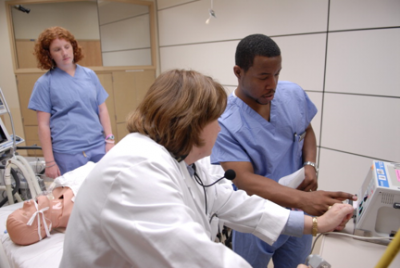
Description: When transitioning to the role of a clinical instructor or preceptor, expert clinicians need new knowledge about education and teaching skills. Unfortunately, there is minimal training available in either the academic or clinical settings that help new bedside educators become skilled at facilitating learning in clinical situations. This presentation will discuss how one workgroup developed training for bedside educators using simulation. Information will be shared regarding topics and scenario development.
Presenter: Denise Foy, MSN, RN-BC (Mayo Clinic)
Link to Webinar
Resources: PowerPoint
Link to Survey to receive a Certificate of Attendance________________________

Virtual Simulation: Past,
Present, and BeyondDescription: In this presentation, the past, present, and future uses of Virtual Simulation will be discussed along with tips for application in schools of nursing.
Presenter: Jone Tiffany DNP, MA, RN, CNE, CHSE, ANEF
Link to Webinar
Resources: PowerPoint
Link to Survey to receive a Certificate of Attendance_______________________
-
Interprofessional Simulation
for Workplace Violence in theEmergency Department
Description: Violent behaviors in healthcare are on the rise, particularly within the Emergency Department. Therefore, mitigation efforts are essential for both staff and patient safety. A quality improvement project to improve staff knowledge, skills, abilities, confidence, and preparedness for those working with potentially violent patient behaviors using interprofessional simulation training was initiated. This presentation includes the methods for implementation and fidelity of the simulation between sessions, theories utilized during the development phase, a description of the training, assessment tools, results with discussion, implications for practice, and lessons learned with recommendations for future training.
Presenter: Theresa M. Gusenius, BSN, RN, DNP Student Wendy Krull BSN, RN, CMSRN, DNP Student
Link to Webinar
Resources: PowerPoint
Link to Survey to receive a Certificate of Attendance_______________________
Standardized Patients: A
Critical Resource in Human
Simulation
.PNG)
Description: This will be a one-hour webinar outlining best practices in developing a standardized patient program for clinical and academic simulation centers. The development of standardized patients will be discussed in the context of the full continuum of human simulation, from role-play to the engagement of patient educators in pre-licensure education and clinical training.
Presenter: Jane Lindsay Miller MA, PhD
Link to Webinar
Resources: PowerPoint
Example of a Recruitment Flyer for SP
Link to Survey to receive a Certificate of Attendance
_______________________
-
Description:
Presenter:
During this webinar you will learn how to use unfolding cases into your simulation events. Learn to implement use of simple multiple modalities when you don't have a high-end simulator.
Annette Benson MS, RN, CNE
-
Resources:
-
Description:
Presenter:
This presentation will describe the planning and Implementation of a 6 hour
interactive, simulation-based course exposing new OB RN's to high risk, low frequency obstetrical events.
Kimberly Hinrichs MSN, RN, CHSE
Catherine Wagner BA, RNC
Erin Cox BSN, RNC -
Resources:
-
Description:
Presenters:
Selecting a theory as a framework for simulation activities is key to program success. In this session we will discuss a
broad range of theories as they apply to simulation. Some support specific aspects of simulation, such as task/skills
training, debriefing, or team events. While others are more comprehensive and can be applied to most activities in
simulation education. We will discuss theories from different disciplines that the simulationist may consider in the
development, implementation, facilitation and debriefing of specific simulation activities and the broader use as a
foundation for a simulation program.Gail Johnson, PhD(c), CPHQ, CHSE, CHSOS
Carol Reid, PhD, MSN, CNE -
Resources:
-
-
Description:
Presenters:
Using the INACSL standards to establish fundamental skills as a facilitator
Colleen Royle EdD, RN
Rose Raleigh MS, RN -
Resources:
-
Description:
Presenter:
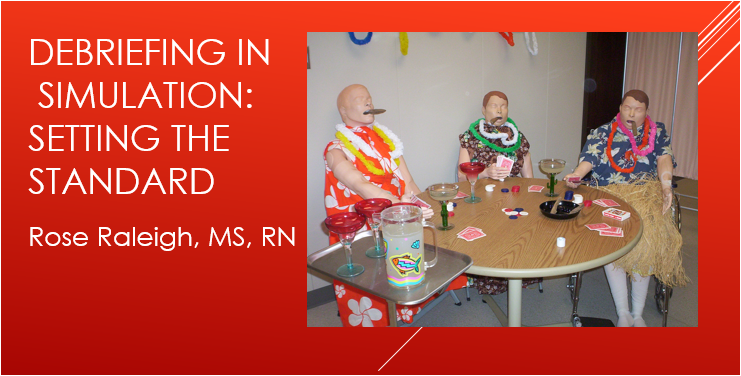
This presentation is intended to familiarize people with the INACSL standards and formal methods of debriefing. Transitioning to debriefing along with effective and ineffective methods will be covered as well.
Rose Raleigh MS, RN
-
Resources:
-
Description:
Presenter:
Presentation will cover what pre-briefing is, the purpose of a pre-briefing and give examples of prep and pre-briefing.
Jeanne Cleary MA, BSN, RN
-
Resources:
-
Description:
Presenters:
Virtual simulation in nursing education is a strategy that provides a variety of safe practice experiences and exposure to rare patient situations in an online format. This webinar includes a recipe (items to consider when using and/or designing virtual simulation) for how nurse educators may begin using virtual simulations in teaching practice. Included are benefits and limitations of virtual simulations, along with the implications for nursing education.
Dr. Nancyruth Leibold, EdD, RN, PHN, CNE
Dr. Laura M. Schwarz, DNP, RN, CNE -
Resources:
-
Description:
Presenter:
Pre-briefing and Debriefing- The aim of this webinar is to critically review what is felt to be important regarding the role of pre-briefing / debriefing in the field of simulation- based learning, how it has evolved and developed over time, and the different styles or approaches that are used.
A review of high fidelity simulation literature for best practices will be identifiedDr. Joseph P. Buhain, EdD MBA RRT NREMTB FAARC
-
Resources: